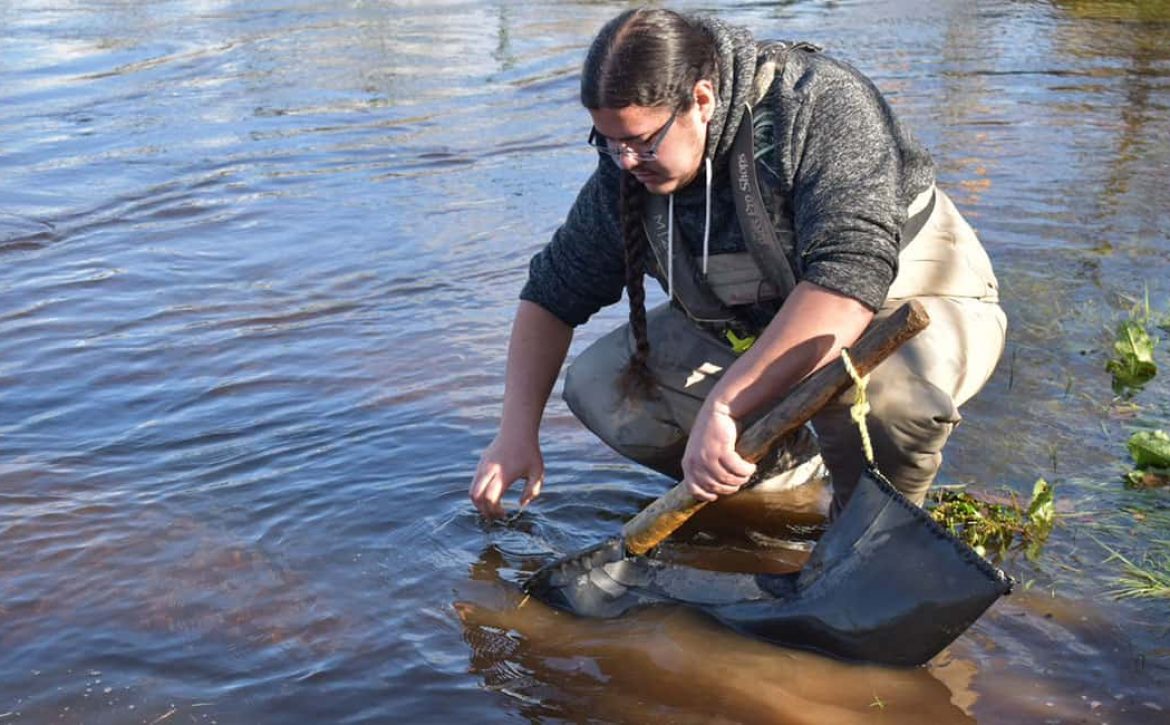
photo of indigenous man fishing

Virtual Indigenous Conference on Cumulative Effects

March 23 to 24, 2021

1 pm to 4 pm EST, Tuesday and Wednesday

Please click here to be directed to the conference website where you can view the detailed program and register.  

Join us for the Indigenous Centre for Cumulative Effects Virtual Conference! The conference will bring together Indigenous communities and organizations as well as national and international thought leaders to explore and discuss strategies to effectively manage the cumulative effects resulting from changes to the environment or to the human well-being from past, present and future development projects and human activities.

Grounded in Indigenous perspectives and worldviews, the conference will highlight community-based experiences and best practices to address the cumulative effects of human activities relative to the environmental, cultural, social and health aspects of communities.

The conference will also provide updates on the activities on the Indigenous Centre for Cumulative Effects since the Indigenous Forum on Cumulative Effects held on Blackfoot territory in February 2020.

Who Should Attend

This conference is primarily for First Nation, MÃĐtis and Inuit communities and Indigenous organizations that undertake, or aspire to undertake, cumulative effects assessment, monitoring and management in their communities. The conference will be of interest to individuals interested in or having responsibilities related to cumulative effects such as land managers, environmental technicians, knowledge holders and land guardians.

For information about the conference, please email Micheline BÃĐlanger. 

Read More
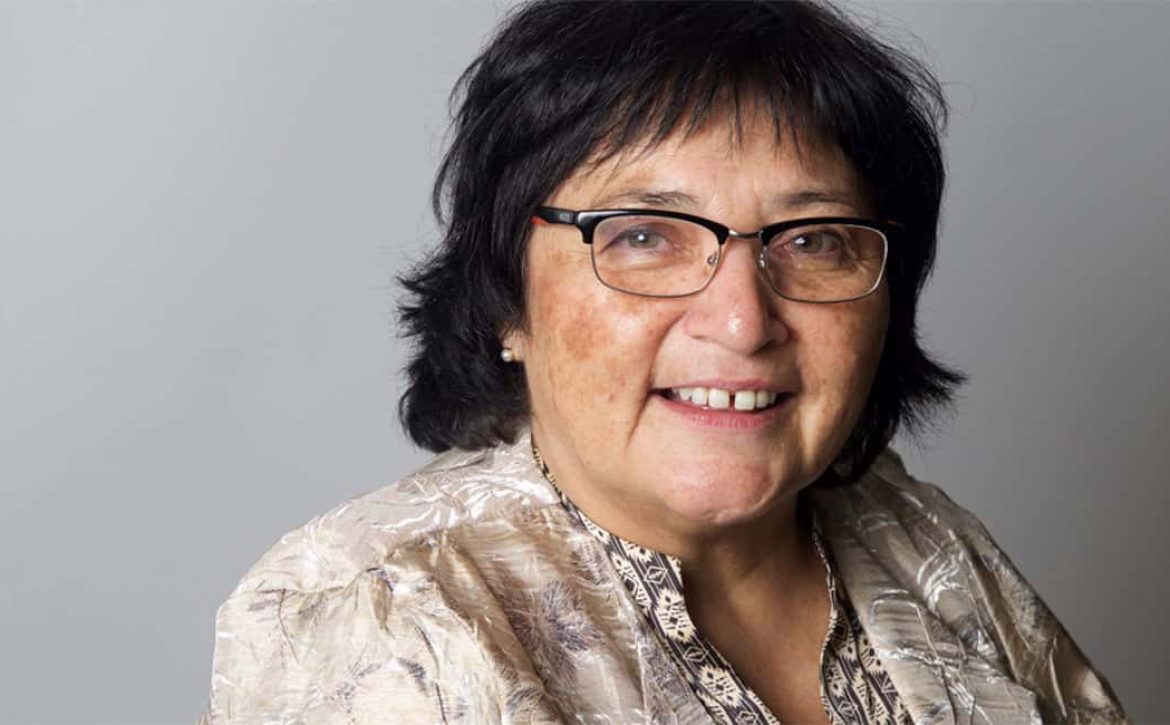
photo of leona irons, board chair of icce

Message from Interim Chair

It is a pleasure to write to you in my role as the interim Chair of the recently established Indigenous Centre for Cumulative Effects (ICCE), to provide you with the latest information about the Centre. I wish to encourage you to engage as a member of ICCE Technical Advisory Committee (TAC).
 
The Indigenous Centre for Cumulative Effects was legally incorporated as a not-for-profit organization in November 2019. This was possible due to a funding commitment from the Government of Canada and followed roundtable discussions with a broad group of Indigenous organizations, individuals, and other partners to help lay the groundwork for the Centre’s foundation. 
 
The Centre’s objective is to help build and enhance the technical and scientific capacity of Indigenous communities for cumulative effects assessment, monitoring and management, based on the values of First Nations, MÃĐtis and Inuit communities to better protect their community’s lands and culture. This will be achieved, in part, by establishing a network of practitioners and potential partners to facilitate the sharing of information and knowledge among communities, developing tools and resources to share and maintain best practices and raising awareness about cumulative effects from Indigenous perspectives.
 
An interim Board of Directors was established with the administrative role of helping to guide the initial activities of the Centre. This included hosting the first Indigenous Forum for Cumulative Effects in February 2020 to introduce the Centre to communities and solicit feedback from participants on the various aspects of ICCE development.
 
We are now establishing an independent Technical Advisory Committee (TAC) which will provide ongoing advice to the Centre on cumulative effects. More information on the roles and responsibilities of the TAC, along with the required qualifications, can be found in the Annex to this letter. Please take the time to reflect on how you or someone else in your community can contribute to the success of ICCE. We would like to receive applications from interested candidates for the Technical Advisory Committee (TAC) before October 2, 2020. Applications should include a CV or letter including a description of relevant experience and expertise, as well as the reasons you are interested in being part of this group. Please send your expression of interest as well as any questions you may have to our Executive Director Leea Litzgus. 

Please note that a separate letter is being sent to recruit Directors for the ICCE Board. Information on the Board of Directors is also provided in the Annex, so that you can see the differences between the two groups. It is important to note that while ICCE Board members must be Indigenous, this is not the case for the Technical Advisory Committee. The TAC may include a mix of Indigenous and non-Indigenous people who will be selected based on their expertise.
 
ICCE represents a great opportunity for Indigenous peoples to develop capacity and tools, and share information in the important area of cumulative effects. The Centre will support Indigenous people in our continual quest to build healthy and sustainable communities consistent with Indigenous culture and values. For more information on ICCE and on the February Indigenous Forum, I invite you to consult our website at www.icce-caec.ca, which is currently under construction and will be increasingly populated with information in the coming weeks.

Read More

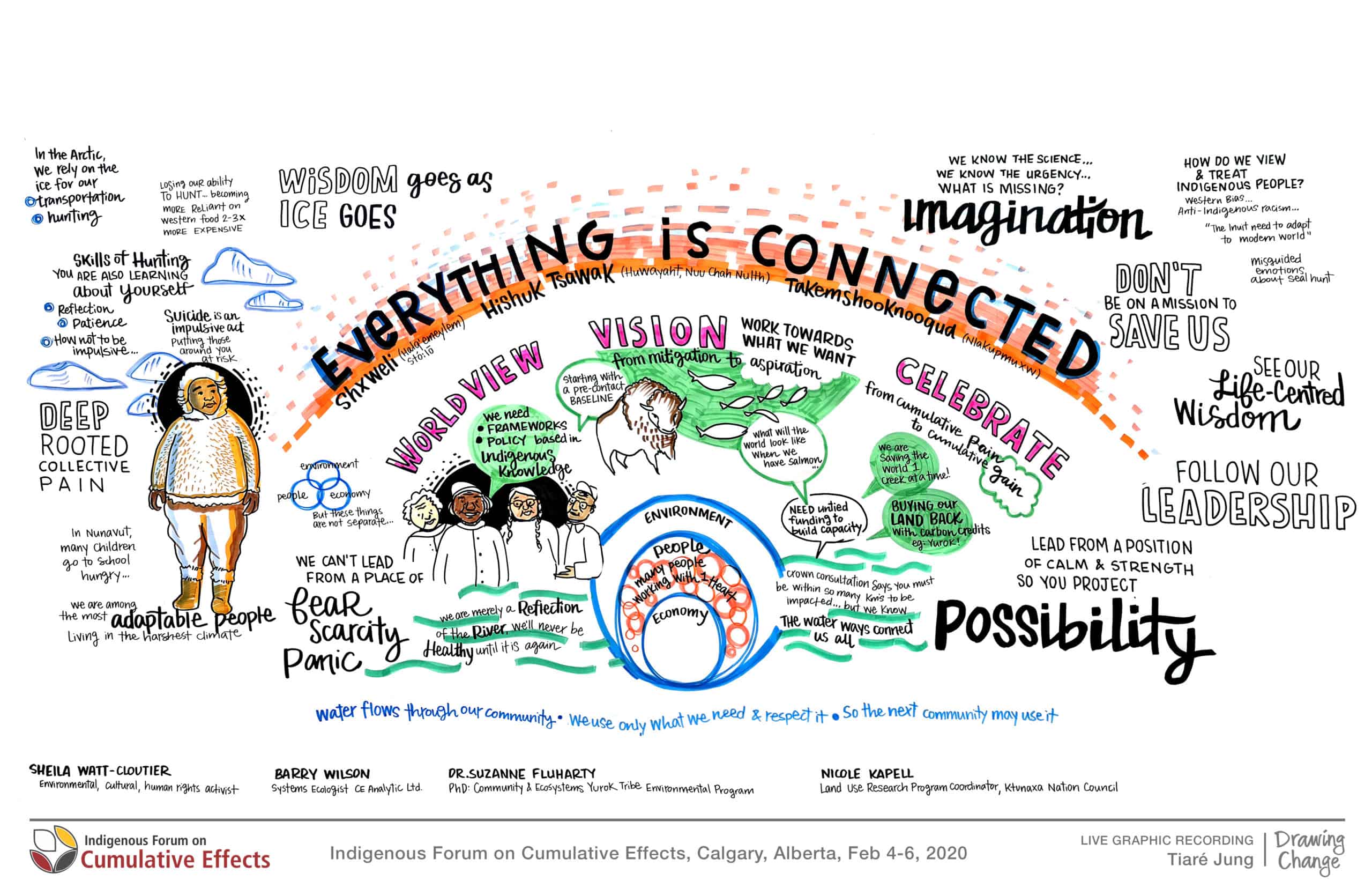
2020 Indigenous Forum on Cumulative Effects

February 3 to 6, 2020
Westin Calgary, Calgary AB

Building a new, Indigenous organization that will support the technical and scientific capacity of communities to undertake cumulative effects work.

Join the Conversation

Hosted by the Indigenous Centre for Cumulative Effects, the inaugural Indigenous Forum on Cumulative Effects brings together Indigenous communities, thought leaders and relevant Indigenous organizations to explore and discuss strategies to effectively manage the cumulative effects resulting from development and other activities, such as climate change, on their lands, resources and communities.

Grounded in Indigenous perspectives and worldviews, the Forum will highlight community-based experiences and best practices to address the cumulative impacts of human activities to the environmental, cultural, social and health of communities. 


In this way, the Forum will provide an innovative and engaging opportunity for Indigenous communities to network with each other as well as with experts and practitioners in a unique and interactive format. The Forum will also provide an opportunity for attendees to learn more about the newly-formed Indigenous Centre for Cumulative Effects and discuss how it can best serve the needs of Indigenous communities. 

This event is primarily for First Nation, MÃĐtis and Inuit communities and relevant Indigenous organizations who undertake, or aspire to undertake cumulative effects assessment, monitoring and management in their communities. Two delegates designated from the community or organization will be supported for travel to attend the Forum.

About the Centre

Indigenous peoples have a profound connection to their environment and are best positioned to understand how cumulative effects from development and other activities impact their lands, resources and communities over time. However, with some exceptions, Indigenous participation in the cumulative effects assessment, monitoring and management is often limited by the available capacity in communities. Many communities have expressed a desire to develop this capacity in order to effectively and sustainably manage their lands and waters.

The Indigenous Centre for Cumulative Effects will help to build and enhance the capacity of Indigenous communities for cumulative effects assessment, monitoring and management, based on the values of First Nations, MÃĐtis and Inuit communities.  In this spirit, the Centre will help to facilitate networking and the sharing of knowledge and experience among communities as well as assist in the development of necessary tools for communities to undertake projects related to cumulative effects assessment, monitoring and management. The Centre is being developed in collaboration with Indigenous partners and will operate as a not-for-profit organization.

What Are Cumulative Effects?

The Canadian Council of Ministers on the Environment describes cumulative effects as a change in the environment caused by multiple interactions among human activities and natural processes over time. Cumulative effects can impact a broad array of resources and ecosystem components. Identifying and implementing measures to control, minimize or prevent the adverse consequences of cumulative effects will lead to sound and adaptive environmental management practices.

The goal of cumulative effects assessment and management is to preserve ecological integrity and sustain natural ecological processes for the benefit of future generations.

Download the Forum Program >

Read More
main-10

Cumulative Effects

The Canadian Council of Ministers of the Environment defines cumulative effects as changes in the environment caused by multiple interactions among human activities and natural processes that accumulate across time and space.

Some Indigenous communities and organizations have brought their perspective to cumulative effects by developing their own definition. Their original take helps to better understand cumulative effects. For example, the Metlakatla Cumulative Effects Monitoring program defines cumulative effects as “changes to the environment or human well-being from past, present, and future development projects and human activities”.  

Another Indigenous organization that has elaborated on the definition of cumulative effects is the Nunavut Impact Review Board (NIRB). In 2007, they defined cumulative effects as “the impacts on the biophysical and socio-economic environment that results from the incremental effects of a development when added to other past, present, and reasonably foreseeable future developments, regardless of what agency or person undertakes such other developments. Cumulative impacts can result from individually minor but collectively significant actions taking place over a period of time”.

When we look at cumulative effects from an Indigenous perspective, we always consider the cultural, social, and health impacts — in addition to the environmental effects — of such activities and processes on our land, water and air.

Across Canada, Indigenous communities are witnessing substantial changes that threaten our well-being. For example, the decrease of species that are vital to local and traditional food systems, such as salmon and caribou, may be devastating for our traditional cultural practices and the regional economy as a whole.

As Indigenous communities, we aspire to better understand how the cumulative effects of activities related to economic expansion and industrial development affect every person, place and thing on our evolving territory.

Facilitating enhanced assessment, monitoring and management capacity is vital for sound environmental stewardship and effective decision-making — for today, and into the future — because we are all connected.

Read More
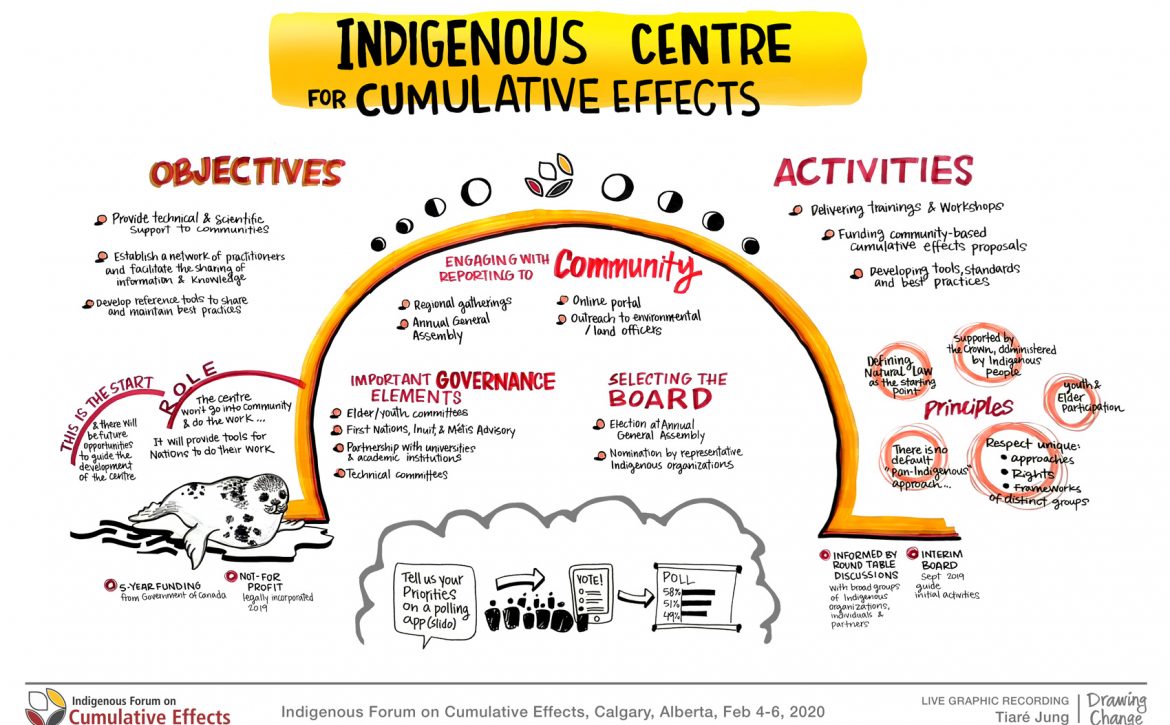
drawing-icce-01

Establishment of the Center

The Indigenous Forum on Cumulative Effects provided an opportunity to express the interests, technical ability, and knowledge of each community to help build the objectives, activities, and governance of ICCE.

Read More
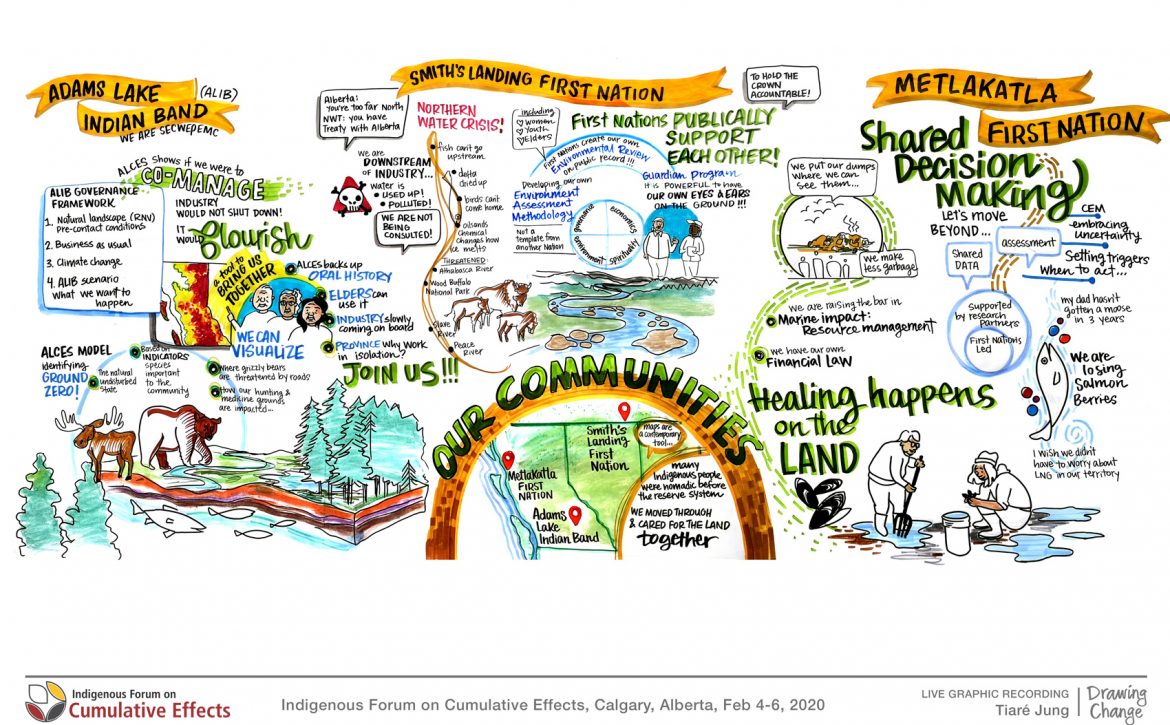
drawing-icce-community-01

Indigenous Communities

Indigenous Communities recognize that sharing knowledge, strengthening relationships, supporting each other, and working together is a valuable part of who we are as a collective people.

Read More
main-09

Community

As First Nations, MÃĐtis and Inuit peoples, we have a profound connection to Mother Earth and our communities. We are conscious about how the cumulative effects from development, competing land use priorities and other factors can have an impact on the well-being of our communities over time. 

Understanding cumulative effects is connected to many aspects of our Indigenous communities, including:

  • traditional teachings and practices
  • Indigenous values    
  • health and well-being
  • self-determination
  • access to community territory
  • taking care of land, air and water
  • economic development
  • capacity building
  • Indigenous Rights

We Are Two-Eyed Seeing

We are First Nations, Inuit and MÃĐtis from Indigenous communities across Canada.

We are building our capacity to share our knowledge, experience and strengths to ensure the well-being of our communities for the future.

We are Two-Eyed Seeing, which means we respect and value both Indigenous and non-Indigenous knowledge systems.

We are Indigenous community members from all traditions, including: 

  • Grandmothers and Grandfathers 
  • Elders and Youth 
  • Traditional Practitioners 
  • Knowledge Keepers 
  • Changemakers 
  • Land Guardians

We are professionals and students interested in cumulative effects, including:

  • land managers working for Indigenous community organizations 
  • analysts, scientists, researchers and technical experts
  • community partners and consultants 
  • Indigenous and non-Indigenous government officials
We Are Building Community

We are continuously growing our community. If you are interested in sound governance, knowledge sharing, and skills development relative to cumulative effects, consider joining our circle by:

  • participating in a leadership role: Board Member
  • providing expertise and knowledge: Technical Advisor
  • facilitating relationships with your community and ICCE: Community Liaison
  • funding or subsidizing activities of the Centre: Funding Partner
  • teaching or training about cumulative effects: Trainer

We are nurturing partnerships between Indigenous communities and various organizations to advance our understanding of cumulative effects, including:

  • assessment, management, monitoring tools and knowledge to support our work 
  • skills development opportunities and training resources 
  • knowledge gathering and sharing platforms
  • our traditional, scientific and technical expertise
  • collaborations with universities and academic institutions

Contact us if you are interested in getting involved with ICCE in any of the above roles. 

Read More
drawing-icce-teachings-01

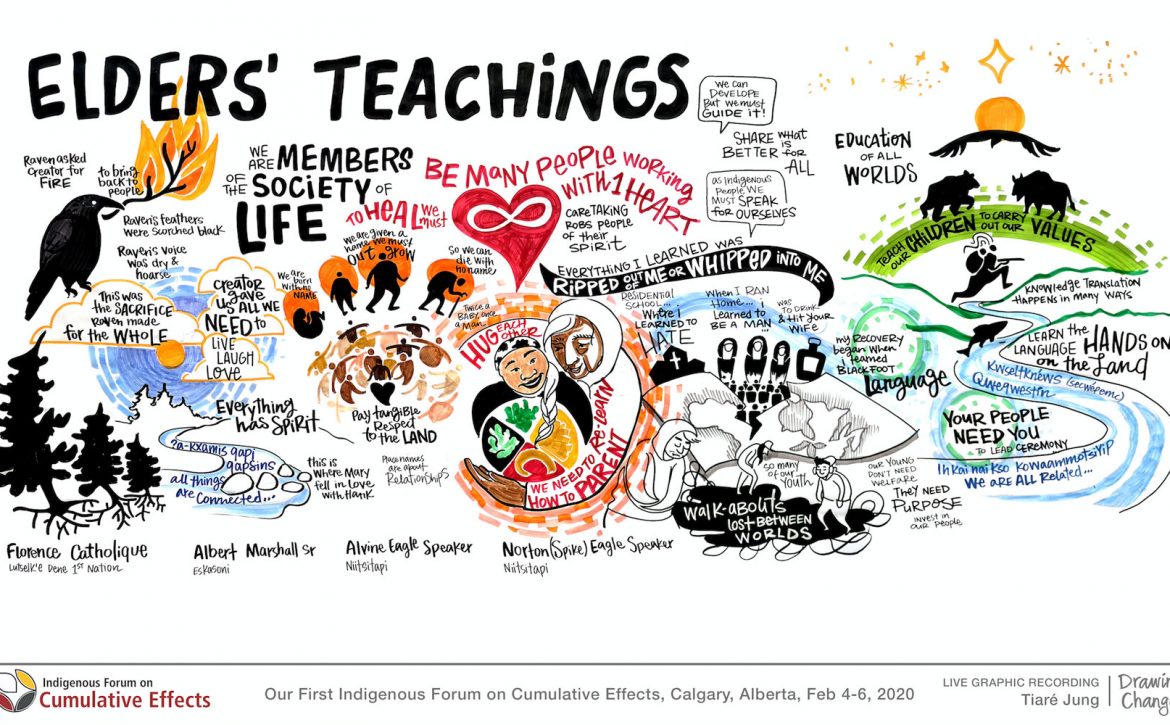
Teachings of Our Elders

Our Elders share their knowledge and wisdom with their community. Their teachings encompass and reconcile the past, present and future so we can grow as many people working with one heart.
Read More
drawing-icce-connected-01

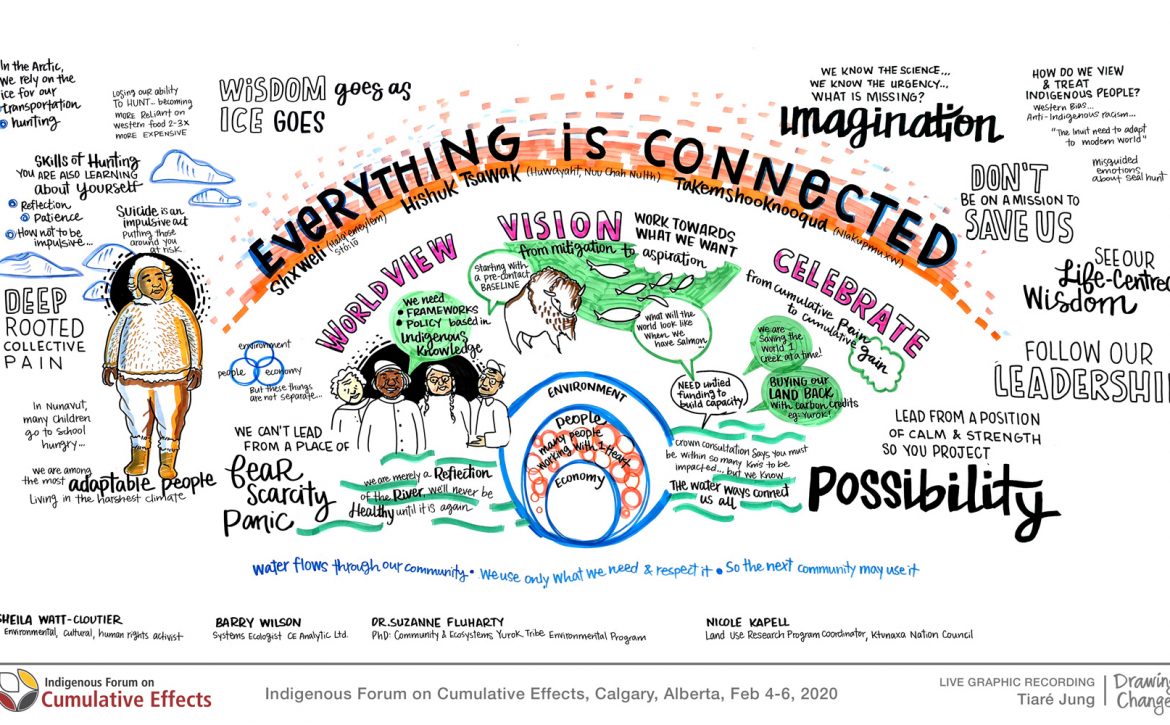
Everything Is Connected

When something hurts the land, the waters, or the air, it hurts us and our communities. We are all connected.

Read More
main-08

About ICCE

Indigenous communities are looking to better manage the social, cultural, health, environmental and economic issues related to cumulative effects on every person, place and thing — because we are all connected.

The Indigenous Centre for Cumulative Effects (ICCE) is an independent organization that supports Indigenous communities to undertake cumulative effects work. ICCE is a non-political organization and remains neutral on issues. ICCE is independently operated by Indigenous people.

Objective

The primary objective of ICCE is to help build and enhance the technical and scientific capacity of Indigenous communities to address cumulative effects, based on the values of First Nations, MÃĐtis and Inuit communities across Canada.  ICCE is a network for Indigenous communities to access information, resources and best practices about cumulative effects. ICCE recognizes there is much to draw from both Indigenous and Western-based knowledge. Navigating cumulative effects can be complex, but is rich with opportunity, and the Indigenous Centre for Cumulative Effects seeks to be a support to guide a community’s path.
The ICCE mission is to create networks, and develop and share knowledge to empower community-based approaches to culturally relevant cumulative effects assessment, monitoring and management to support Indigenous well-being and decision-making.
Values
Indigenous values are core to the ICCE mission, and they inform our guiding principles. There is no single Indigenous culture in Canada, and we look to shared values reflected in our traditional teachings to guide our path, including:
  • Etuaptmumk, or Two-Eyed Seeing: seeing from one eye with the strength of Indigenous knowledge and way of knowing, and from the other eye with the strength of Western knowledge and way of knowing. Using both these eyes together, for the benefit of all, is a fundamental guiding principle for our work within our communities and with our partners. (Put forward by Mi’kmaw Elder Albert Marshall and adapted from the Institute for Integrative Science & Health.)
  • Respect for diverse and distinct nations: respecting the unique approaches, rights and frameworks of the distinct groups of Indigenous people across the country. There is no default, pan-Indigenous approach to growing the capacity of communities to assess, monitor and manage the cumulative effects occurring in their land, air, water and communities.
  • Intergenerational decision-making: conveying the knowledge of our ancestors, we are keeping in mind that the decisions we make today will have an impact on several generations of the future. Like our ancestors, we must be good caretakers of our land, air and water, not just for our communities today, but also for those of the generations to come, who will live with the consequences of our actions.
  • Tread lightly: being aware that our activities affect the balance of all life in the land, air and water, and, being conscious of treading lightly to minimize harm.
  • Respect, humility, and inclusion: understanding that we are all connected and have knowledge to share. Listening, opening our minds, collaborating, and finding constructive solutions despite our differences will help us grow healthier, stronger sustainable communities now and for the future.

Read More